Cost & TCO
Cost per kilometre: the number most fleets don’t know
Ask a fleet manager what a kilometre costs and you will usually hear the fuel figure. That is maybe half the answer.
FLEETIQ Advisory Team 1 min read
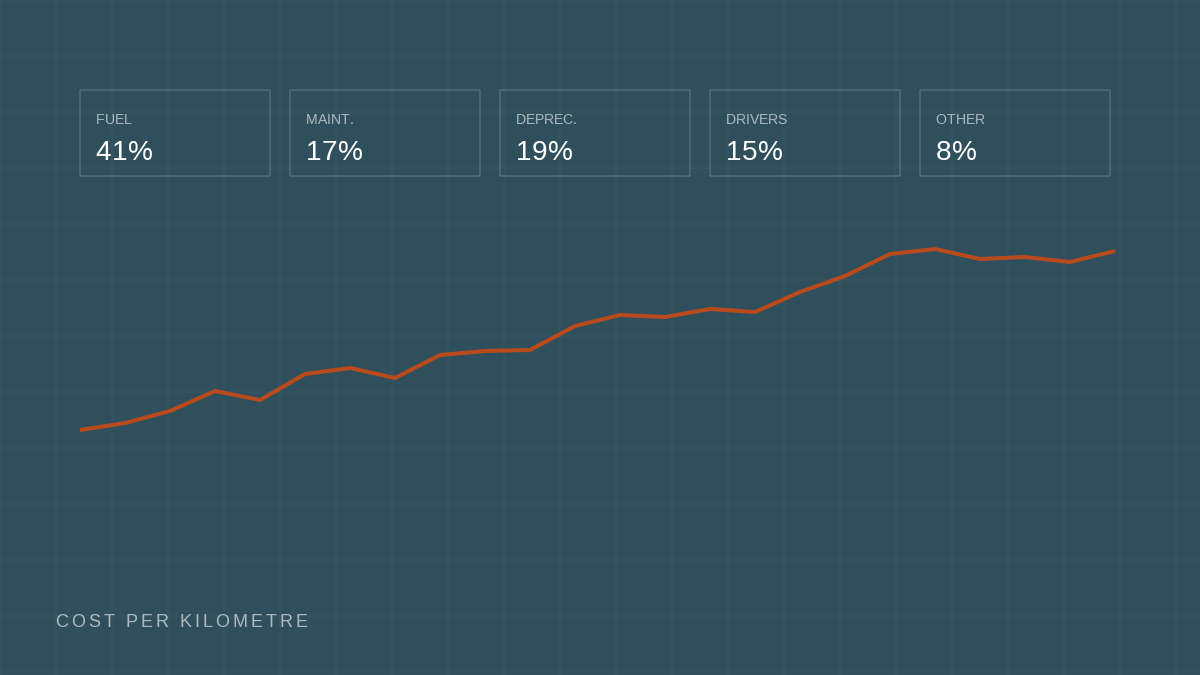
Ask a fleet manager what it costs to run one of their trucks for a kilometre and you will usually hear the fuel figure. It's a fair instinct. Fuel is the number they see every week. But it is often less than half the real cost, and decisions made on half a number tend to go wrong.
What goes in
Cost per kilometre is every cost of running a vehicle over a period, divided by the distance it covered. The usual lines:
- Fuel or energy
- Maintenance and repairs, parts and labour
- Tyres
- Insurance, licences and permits
- Depreciation or lease payments
- Driver wages, allowances and per diems
- Finance charges, if the vehicle was bought on credit
Add them up for a month, divide by kilometres, and you have one figure you can compare across vehicles, depots, brands and years.
Why it changes decisions
Picture a distribution company about to standardise on the cheapest truck in a tender. On purchase price it wins easily. Over six years it can quite easily come third, because parts take weeks to arrive, the trucks spend more days off the road, and nobody wants to buy them second-hand.
Cost per kilometre catches that. Purchase price never will.
Getting started without perfect data
You don't need a fleet management system for this. A spreadsheet with one row per vehicle per month will do. Start with the three biggest lines (fuel, maintenance, depreciation) and add the others as your records improve. A rough cost per kilometre this month beats a perfect one next year.
Once you have it, watch the trend. A vehicle whose cost per kilometre climbs steadily is telling you something about its age, its driver or its workshop. Often all three.