
About
Fleet people who learned to write reports. Not the other way round.
About FLEETIQ Global Limited
01
Who we are
FLEETIQ Global Limited is a fleet, transport, logistics and mobility advisory firm. We work with companies, governments, transport operators and investors that depend on vehicles to deliver something: goods to shelves, staff to sites, passengers to work, aid to the people waiting for it.
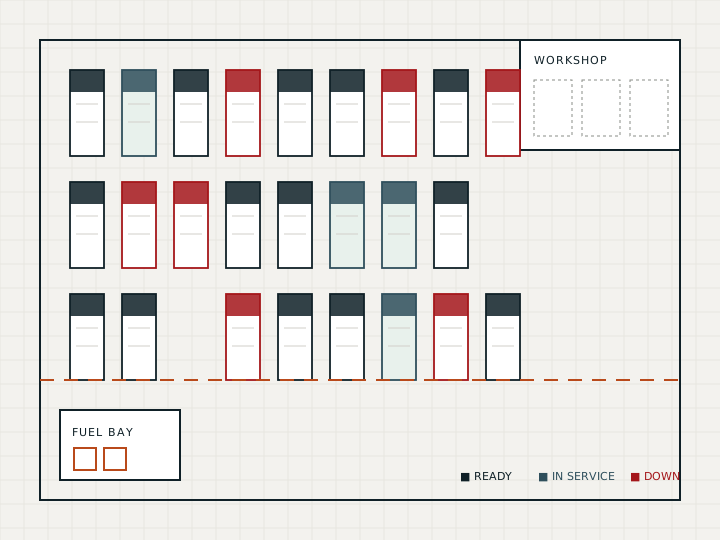
The firm grew out of operations. Our advisers have run depots, managed workshops, bought fleets through public tenders and sat on the investor side of the table. That mix is deliberate. Good fleet advice needs someone who understands a balance sheet and someone who knows what a worn kingpin sounds like.
We pair that experience with digital tools of our own, so every improvement is measured, reported, and still there long after the engagement ends.
Leadership
A note from our Chief Executive
“A fleet is a balance sheet on wheels. Run it like one, and it stops surprising you.”
Every fleet we walk into has the same quiet problem. The numbers that matter are scattered across fuel receipts, job cards, tracker logins and somebody's memory. Nobody is hiding anything; there just isn't one place where the truth lives.
Fixing that is not glamorous work, and it is rarely quick. It is also the difference between a fleet that drains a business and one that carries it.
We built FLEETIQ to do that work properly for organisations that move people and goods across Africa. We measure before we advise. We say the uncomfortable thing when it needs saying. And we stay until the numbers move.
If you run vehicles, public or private, I would like to hear what is keeping you up at night.
02
Where we are headed
Our vision
An Africa where every fleet, public or private, runs on evidence: safe on the road, honest on the balance sheet, and ready for whatever fuel comes next.
Our mission
To make fleets across the continent cheaper to run, safer to drive and easier to account for, by pairing people who have managed depots with digital tools that measure every change we make.
03
What we hold ourselves to
Four rules. We break none of them to win work.
-
01
Measure before we advise
No recommendation leaves our office without a number attached to it.
-
02
Say the uncomfortable thing
If the problem is a policy the chief executive wrote, we will say so. Politely, and with evidence.
-
03
Leave capability behind
Your team should be able to run the new system without phoning us.
-
04
Independence is not negotiable
No vendor commissions, no referral fees, no exceptions.
04
How we work with you
Every engagement follows the same four stages, scaled to the size of the problem.
-
01 1–2 weeks
Strategy
We agree what success looks like and how it will be measured. Scope, baseline KPIs, the data we need and the people we need to speak to.
-
02 2–4 weeks
Data Gathering
Fuel records, job cards, tracker exports, insurance claims, the asset register. We collect it, clean it and build your baseline.
-
03 1–3 weeks
Field Audit
Our team goes to the depots and the routes. Physical checks, workshop reviews, driver interviews and ride-alongs confirm what the data suggests.
-
04 3–6 months
Implementation Support
We stay while the changes go in: policies, training, vendor renegotiation and the first months of new reporting, until the numbers move.
05
Heard from the yard
A few words from people we have worked with.
We were sure diesel prices were the problem. Then they matched our fills against the trackers and a good share of them did not line up. That one finding changed the whole conversation with our board.
They spent a week in our Kano yard before writing a single slide. You can tell from the recommendations: none of them needed translating for the workshop.
The simulator gave our finance committee a number they could argue with instead of an opinion. Budget meetings are shorter now.
Practical about what a public agency can actually implement inside one procurement cycle. That is rarer than it should be.
Their field review picked up maintenance gaps that never showed up in the data room. We restructured the facility because of it.