Clean mobility
Before you buy electric buses, check the depot
Electric buses can beat diesel on cost in African cities. Whether they do depends on things the brochure leaves out.
FLEETIQ Advisory Team 1 min read
Electric buses are arriving in African cities and the pitch is easy to like: no diesel bill, fewer moving parts, cleaner air on crowded corridors. On the right routes, the economics work. On the wrong ones, the buses end up parked, waiting for a charge.
The route comes first
Start with how far each bus travels in a day, how long it rests between trips, and how full it runs at peak. A bus doing 180 km a day with a long midday layover is a very different proposition from one doing 320 km with no break at all. Air-conditioning, hills and heavy loads all eat into range, sometimes by a third.
Then the power
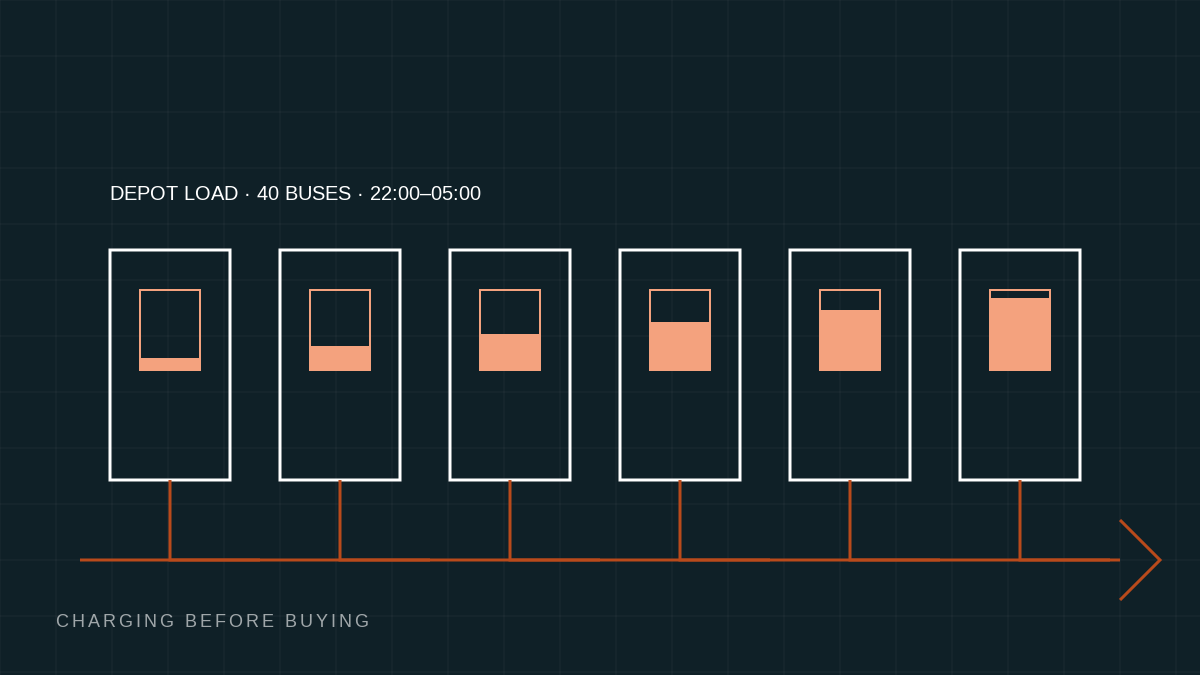
Charging forty buses overnight needs serious electrical capacity. In many cities the grid connection alone takes months to arrange, and outages mean you need backup: solar with storage, generators, or a mix. If the plan quietly assumes diesel generators will charge the buses, run the sums again.
Then the people
Technicians who know diesel engines need retraining before they touch high-voltage systems. Drivers need to learn regenerative braking to protect range. Spare parts and battery warranty support need to be local, or at least reachable within days rather than months.
Start small, measure everything
The transitions that work tend to begin with a pilot on the two or three routes where the numbers look strongest, with proper data collection from day one. Six months of real operating data is worth more than any feasibility study. Including ours.
Weighing up an EV, CNG or hybrid fleet? Our clean mobility work starts with exactly these questions.